How to Play Golf on a Pool Table: Simple Rules for a Fun Game

Quick answer: Pool golf is a fun game where each pocket is played like a golf hole. In one common version, each player gets an object ball and tries to sink it in the pockets in order, one through six, using as few strokes as possible. You count every stroke, and the player with the lowest total after all six pockets wins. Rules vary a lot from place to place, so agree on them before you start.
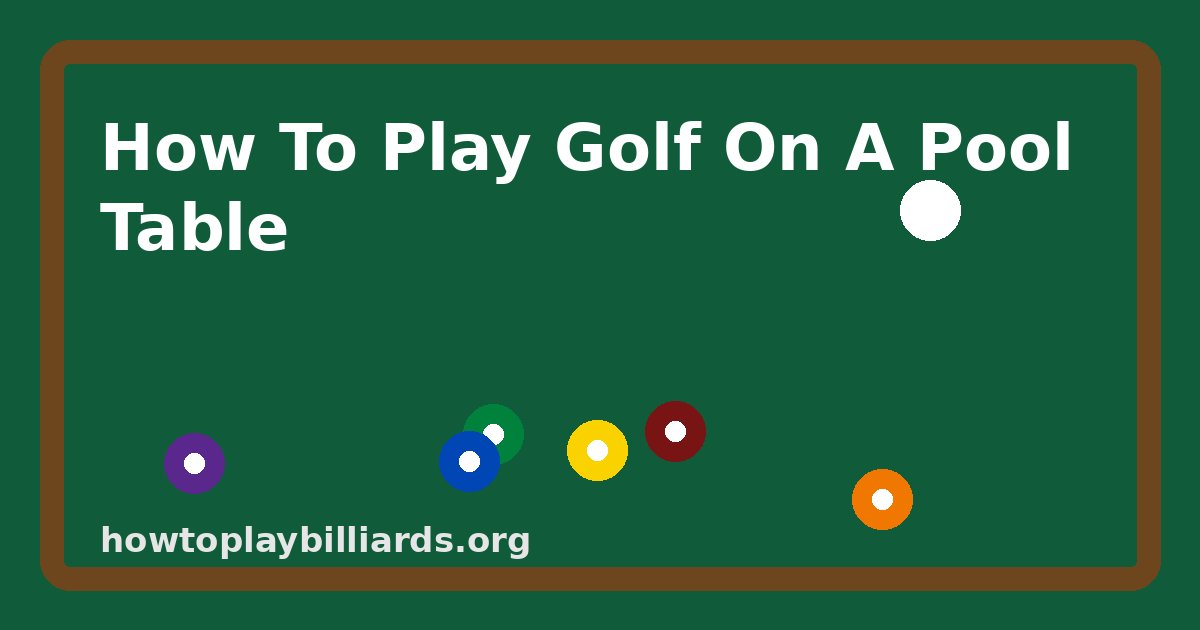
How to play golf on a pool table: a cue ball and one object ball lined up with a corner pocket like a golf hole
How to play golf on a pool table: play each pocket like a hole and count your strokes.

Pool golf is a great game for practice, for kids, and for groups who want something different from 8 ball or 9 ball.

What You Need

  • A pool table
  • A cue ball
  • One object ball for each player (each player uses a different ball)
  • Paper and a pen for keeping score

One Common Set of Rules

Many versions exist. Here is one simple way to play:

  1. Number the pockets. For example, start at one corner pocket and go around the table one to six.
  2. Set up. Each player places their ball on the foot spot (or another agreed spot) when starting.
  3. Shoot for pocket one. Use the cue ball to drive your object ball toward the first pocket.
  4. Count each stroke. Every shot counts as one stroke.
  5. Sink the ball. When it drops in the right pocket, write down your strokes for that hole.
  6. Move to the next pocket. Spot the ball again or play from where it lies, as agreed.
  7. Finish all six. Add up your strokes. Lowest total wins.

Penalties (House Rules)

Agree on penalties before you play. Common ones are:

Mistake A common penalty
Scratching the cue ball Add one stroke
Ball in the wrong pocket Add one stroke and spot it
Missing your ball completely Add one stroke
Ball jumps off the table Add one stroke and spot it

Other Versions You May See

  • Turns by stroke: Players take one stroke each and rotate.
  • Turns by hole: One player finishes a hole before the next player goes.
  • Bank golf: Every shot must bank off at least one rail.
  • Par holes: Players set a par for each pocket, like real golf.

Since the rules vary so much, the most important step is agreeing on them first.

Why Pool Golf Is Good Practice

  • Speed control. You learn to stop the object ball near the next pocket.
  • Long shots. You practice shots across the whole table.
  • Banks. Many holes need bank shots. Our post on how to play bank pool can help.
  • Planning. You think ahead to set up the next hole.

Tips to Score Lower

  • Lag your ball. If you cannot make it, leave it close to the pocket.
  • Think one hole ahead. Sink the ball with the cue ball in a good spot.
  • Play the percentages. A sure two strokes can beat a risky one.
  • Keep the cue ball in play. Scratches add strokes.

Great for Groups and Kids

Pool golf works with two players or many. It is easy to learn and less about rules than about having fun. For more group games, try cutthroat pool or killer pool.

A Sample Score Card

Make a simple chart with each player’s name down the side and the numbers one to six across the top. Write the strokes for each hole in the boxes, then add them up at the end. Keeping score on paper ends most arguments and lets you compare games over time.

The Bottom Line

To play golf on a pool table, treat each pocket like a golf hole, count every stroke, and try to finish all six pockets in as few strokes as you can. Agree on the pocket order, penalties, and turn order before you begin. It is a fun game that also builds speed control and planning.

Keep Reading on This Site

Frequently Asked Questions

How many players can play pool golf?

Two or more. Each player uses a different object ball.

What is a good score in pool golf?

It depends on your rules and skill. Try to beat your own last score.

What happens if you scratch in pool golf?

A common house rule adds one stroke. Agree on penalties before you play.

Are there official pool golf rules?

Rules vary from place to place, so most people use house rules.
How to Play 3 Ball Pool: Rules, Scoring and Tips

Quick answer: 3 ball is a quick pool game where each player tries to pocket three balls in the fewest strokes. You rack the 1, 2, and 3 balls in a small triangle on the foot spot. Each player takes a turn alone: break, then keep shooting until all three balls are down, counting every stroke, including the break. The player with the lowest number of strokes wins. Fouls usually add a stroke. Rules vary, so agree on them first.

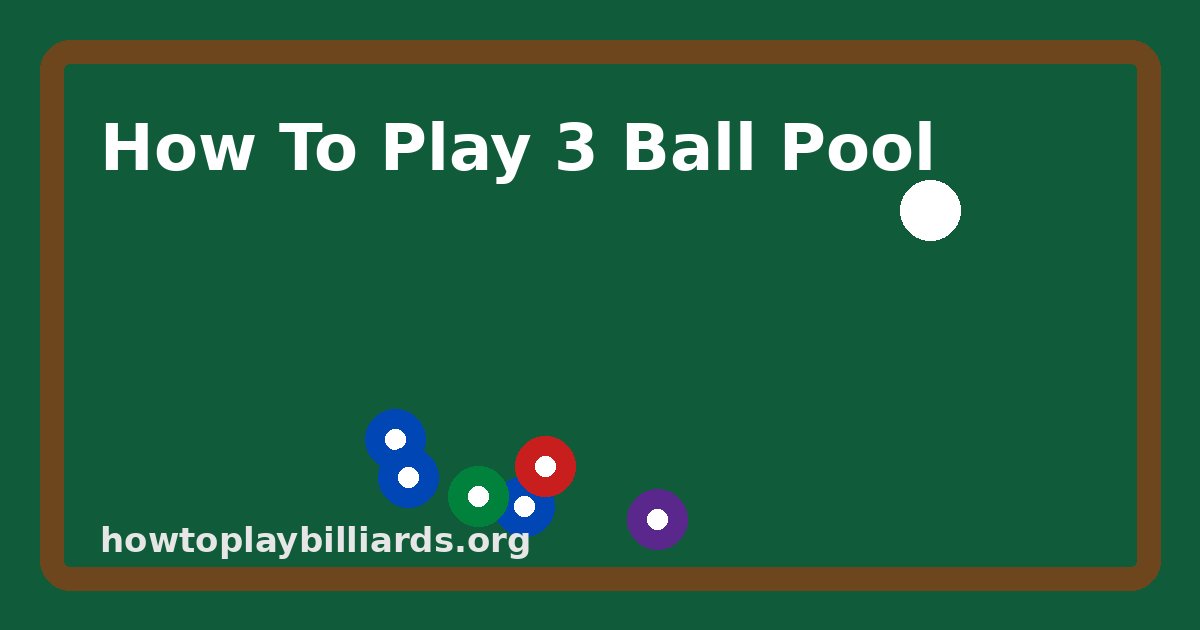
How to play 3 ball pool: three object balls racked in a small triangle on the foot spot of a pool table
How to play 3 ball pool: rack three balls, break, and pocket all three in as few strokes as you can.

3 ball is fast, simple, and great for groups. It is a lot like golf, since the low score wins.

What You Need

  • A pool table.
  • The cue ball and three object balls. Many players use the 1, 2, and 3.
  • A way to keep score.

Setup

  1. Rack the three balls in a small triangle with the front ball on the foot spot.
  2. Make sure the balls touch.
  3. Decide the shooting order.

How a Turn Works

  • The first player breaks from behind the head string.
  • That player keeps shooting until all three balls are pocketed.
  • Count every stroke, including the break.
  • When the player is done, rack again for the next player.

You do not have to call shots in most versions, and balls can go in any order.

Scoring

Event Strokes
Each shot, including the break 1 stroke
Scratch or other foul Often 1 extra stroke
Ball knocked off the table Often 1 extra stroke, and the ball is spotted

The lowest total wins. If players tie, many groups have a playoff.

Common Rule Changes

  • Some groups play with a higher number of rounds and add up the totals.
  • Some groups give ball in hand after a scratch.
  • Some players use different balls, like the 1, 2, and 3 or any three balls.

Tips for a Good Score

The break matters. A good break can drop a ball or two. Try to hit the front ball solid and keep the cue ball near the middle of the table.

Plan your order. After the break, think about which ball to shoot first so the cue ball is set up for the next one.

Use simple position. Stop shots and soft follow are often enough. Our sister site explains how to do a stop shot in pool.

Avoid fouls. A scratch adds strokes and can ruin a good round.

Why 3 Ball Is Good Practice

Every stroke counts, so you learn to make each shot matter. You also practice the break and short runouts, which helps in 9 ball and 10 ball. Our page on how to play 10 ball explains a game where these skills help.

3 Ball vs Other Games

3 ball is a solo score game, a lot like golf. Rotation and cutthroat are head to head games. See our posts on rotation pool rules and how to play bank pool for more games to try.

A Simple Practice Plan

  1. Play 10 rounds of 3 ball by yourself.
  2. Write down your score each time.
  3. Find your average.
  4. Try to lower your average next session.

Etiquette for Group Games of 3 Ball

When a group plays 3 ball, a little etiquette keeps it fun. Let each player finish their round without talking during their shots. Have one person keep score so there is no mix up. Rack quickly for the next player. If someone is new, explain the rules before they break. Agree on what counts as a foul before the first round so nobody argues later.

The Bottom Line

To play 3 ball pool, rack three balls on the foot spot, break, and pocket all three in as few strokes as you can. Count every stroke, add strokes for fouls, and the lowest score wins. It is a quick, fun game and great practice for the break and short runouts.

Keep Reading on This Site

Frequently Asked Questions

How do you score 3 ball pool?

Count every stroke, including the break, until all three balls are pocketed. The lowest total wins.

What happens if you scratch in 3 ball?

In many versions a scratch adds one stroke. Some groups also give ball in hand.

Do you have to call shots in 3 ball?

Most versions do not require calling shots, and balls can go in any order.

How many players can play 3 ball pool?

Any number can play, since each player shoots their own round.

Rotation Pool Rules: How to Play the Classic Points Game

Quick answer: Rotation is a pool game played with all 15 object balls. On every shot, the cue ball must hit the lowest numbered ball on the table first. Each ball you pocket legally is worth points equal to its number, so the 15 ball is worth 15 points. All 15 balls add up to 120 points, so the first player to reach 61 points usually wins, since that is more than half.

Rotation pool rules: a full rack of fifteen numbered pool balls with a scorecard tracking points
Rotation pool rules: every ball is worth its number in points.

Rotation, also called 61, is a classic game that teaches control and planning. It is a lot like 9 ball, but you use the full rack and keep score with points. House rules vary, so agree on rules first.

The Rack

Position Ball
Front, on the foot spot 1 ball
Back corners 2 and 3 balls, under many rules
Center 15 ball, under many rules
Everywhere else Remaining balls

Some groups rack the balls in other ways. Agree before you play.

The Break

The breaker shoots from behind the head string and must hit the 1 ball first. Any balls pocketed on a legal break count for points, and the breaker keeps shooting.

How a Turn Works

  1. Hit the lowest numbered ball first.
  2. If any ball goes in a pocket, legally, you score its points and keep shooting.
  3. If you miss, your turn ends.

Combinations and caroms are allowed as long as the lowest ball is hit first.

Scoring

Ball Points
1 1
5 5
10 10
15 15
All 15 balls 120 total

Keep score on paper or a phone. The first player to 61 usually wins.

Fouls

Common fouls include:

  • Scratching
  • Not hitting the lowest numbered ball first
  • Knocking a ball off the table

Under many rules, balls pocketed on a foul are spotted and do not score. Your opponent may get ball in hand or another penalty. Agree on foul rules before you play.

Strategy Tips

  • Big balls matter. The higher numbered balls are worth more, so position for them when you can.
  • Play safe. If you cannot see a good shot, leave your opponent a hard one.
  • Watch the score. If you are close to 61, focus on reaching it.
  • Combinations help. Hitting a low ball into a high ball can score big.

Why Rotation Is Great Practice

Rotation makes you hit the lowest ball first with all 15 balls on the table. That means a crowded table and tough position. It is great practice for cue ball control and pattern play.

Rotation vs 9 Ball

Feature Rotation 9 Ball
Balls 15 9
Scoring Points per ball Win by making the 9
Game length Longer Shorter

Variations

  • Play to a different score for shorter games.
  • Play with teams.
  • Allow ball in hand only behind the head string after fouls.

How to Keep Score Easily

Use a simple tally. Write each player’s name at the top of a piece of paper. Every time a player pockets a ball legally, write the ball number under their name. Add the numbers at the end of each turn. Some pool halls have scoreboards that slide beads along a wire, which makes scoring even faster. If you play often, keeping a running total in your phone also works well. Clear scoring helps avoid arguments and keeps the game moving.

The Bottom Line

Rotation pool rules are simple: always hit the lowest numbered ball first, score points equal to each ball’s number, and reach 61 points first. It is a fun, classic game that builds cue ball control and planning skills.

Keep Reading on This Site

Frequently Asked Questions

How do you play rotation pool?

Hit the lowest numbered ball first on every shot and score points equal to the number of each ball you pocket.

Why is rotation called 61?

All 15 balls add up to 120 points, so 61 is more than half and usually wins.

Are combinations allowed in rotation?

Yes, as long as the cue ball hits the lowest numbered ball first.

What happens on a foul in rotation?

Under many rules, balls made on the foul are spotted and your opponent gets a penalty like ball in hand.

How to Play Bank Pool: Rules and 5 Tips for Better Bank Shots

Quick answer: In bank pool, every ball you count must be banked, which means it must hit at least one rail before it goes in the pocket. You call the ball and the pocket on each shot. A ball that goes straight in, or falls by accident, usually does not count and is often spotted back on the table. Many games use a full rack, and the first player to make a set number of balls wins. Rules change from room to room, so agree on them before you start.

How to play bank pool: a ball bouncing off the side rail and heading across the table toward the corner pocket
How to play bank pool: every ball you count must go off at least one rail before it drops.

Bank pool is a game for players who love bank shots. It is fun, it is hard, and it can make you much better at seeing angles. Here is how it works.

What Is Bank Pool?

Bank pool is a call shot game where every scoring shot must be a bank. A bank shot is when the object ball hits one or more rails before going into a pocket. Straight in shots do not count.

How to Set Up

There are two common ways to play:

  • Nine ball bank. Use nine balls in a diamond or triangle. The first player to make five banks wins.
  • Fifteen ball bank. Use a full rack of fifteen balls. The first player to make eight banks wins.

Any balls can be used, because the numbers do not matter. Only the count matters.

The Basic Rules

Here are rules used in many bank pool games. They can change, so always check.

  1. Call the ball and pocket. You must say which ball you are banking and where it is going.
  2. It must hit a rail first. The object ball must touch at least one rail before it drops.
  3. No easy kisses. Under many rules, the called ball can not touch another ball on its way to the pocket. Some rooms allow this, so ask.
  4. Accidental balls are spotted. If a ball you did not call goes in, it usually comes back up and is placed on the foot spot.
  5. Fouls cost a ball. Under many rules, a foul means you must spot one of your made balls back on the table. If you have none, you owe one.

How Do You Win?

You win by making the agreed number of banks first. In nine ball bank that is often five. In fifteen ball bank that is often eight.

5 Tips for Better Bank Shots

1. Learn the Mirror Idea

A simple way to start is to picture the pocket as if it were reflected on the other side of the rail. Aim the object ball at that mirror spot. This is not perfect, but it is a good starting point.

2. Use Medium Speed

Speed changes the angle a ball comes off the rail. Hard banks often come off shorter. Soft banks often come off longer. Pick a medium speed and use it while you learn.

3. Watch for Cut Angles

If you have to cut the ball a lot to bank it, the shot gets harder. Look for banks where you hit the object ball nearly full.

4. Keep It Simple

One rail banks are easier than two or three rail banks. Learn the one rail banks first.

5. Play Safe When You Need To

Bank pool has a lot of defense. If you do not have a good bank, leave your opponent a hard one instead.

Bank Pool vs Other Games

Bank Pool 8 Ball Straight Pool
Must bank to count? Yes No No
Call shots? Yes Many rules, yes Yes
Balls to win Often 5 of 9, or 8 of 15 All of your group and the 8 A point total

Is Bank Pool Good for Beginners?

It is hard, but it is a great way to learn banks. Even if you mostly play 8 ball or 9 ball, time spent banking will help you see angles and kick shots better. For other games to try, read our pages on one pocket rules and how to play cutthroat pool.

Grab a friend, rack nine balls, and see who can make five banks first.

Keep Reading on This Site

Frequently Asked Questions

What is bank pool?

It is a call shot game where every ball you count must hit at least one rail before going in the pocket.

How many balls do you need to win bank pool?

Common games are five banks with nine balls, or eight banks with fifteen balls.

What happens if a ball goes in by accident in bank pool?

Under many rules, it is spotted back on the table and does not count.

Do straight in shots count in bank pool?

No. Only called balls that hit a rail first count.

What Is the Difference Between Pool and Billiards? A Simple Guide

Quick answer: “Billiards” is the big family name for games played with a cue and balls on a cloth covered table. Pool, also called pocket billiards, is one kind of billiards, played on a table with six pockets and usually 15 numbered balls plus a cue ball. Carom billiards is played on a table with no pockets, where you score by hitting balls and rails. Snooker is another pocket game played on a larger table with smaller balls. In everyday American talk, people often use “pool” and “billiards” to mean the same thing.

Difference between pool and billiards: a pool table with six pockets next to a carom billiards table with no pockets
Difference between pool and billiards: billiards is the whole family of cue games, and pool is the pocket game inside it.

If you have ever wondered why some people say pool and others say billiards, you are not alone. Both words are right. They just mean slightly different things.

What Does Billiards Mean?

Billiards is the general name for cue sports. These games all use a cue stick, balls, and a table covered with cloth and surrounded by cushions, called rails. There are three main branches:

  1. Pocket billiards (pool)
  2. Carom billiards
  3. Snooker

What Is Pool?

Pool is pocket billiards. The table has six pockets, one in each corner and one in the middle of each long side. Most pool games use a white cue ball and 15 colored, numbered object balls.

Popular pool games include:

  • 8 ball, where one player shoots solids, the other shoots stripes, and you finish by making the 8.
  • 9 ball, where you must hit the lowest numbered ball first and win by making the 9.
  • Straight pool, where you call shots and score points to a set total.
  • One pocket, where each player gets only one pocket.

Common pool table sizes in homes and bars are 7, 8, and 9 feet long.

What Is Carom Billiards?

Carom billiards is played on a table with no pockets. Instead of sinking balls, you score by making your cue ball hit other balls, and sometimes the rails, in the right way. The most famous carom game is three cushion billiards, where your cue ball must touch the rails at least three times before it hits the last ball. Carom is very popular in parts of Europe, Asia, and South America.

What Is Snooker?

Snooker is a pocket game too, but it is different from American pool:

  • The full size table is larger than a pool table, about 12 feet long.
  • The balls are smaller.
  • It uses 15 red balls and 6 colored balls worth different points.
  • Players score by potting a red, then a color, and so on.

Snooker is very popular in the United Kingdom and many other countries.

Quick Comparison

Pool Carom Snooker
Pockets 6 None 6
Balls 15 numbered plus a cue ball Usually 3 balls in all 15 reds, 6 colors, and a cue ball
How you score Pocket balls Hit balls and rails Pot reds and colors for points

So Which Word Should You Use?

In the United States, most people say “pool” when they mean games like 8 ball and 9 ball. “Billiards” can mean the same thing in casual talk, and many pool halls call themselves billiards halls. If you want to be exact, say pool for pocket games and carom billiards for the no pocket games.

Which One Should You Learn First?

For most people in the United States, pool is the easiest place to start because tables are easy to find in bars, game rooms, and pool halls. Once you know the basics of aiming and cue ball control, those skills help in carom and snooker too.

Common Pool and Billiards Words

  • Cue ball: the white ball you hit with the cue.
  • Object ball: any ball you are trying to hit or pocket.
  • Rail or cushion: the rubber edge around the table.
  • Break: the first shot that spreads the rack.

No matter what you call it, it is a great game for all ages.

Keep Reading on This Site

Frequently Asked Questions

Is pool the same as billiards?

Pool is one kind of billiards. Billiards is the family name for all cue sports, including pool, carom, and snooker.

Does billiards have pockets?

Pool and snooker tables have pockets. Carom billiards tables have no pockets.

What is three cushion billiards?

It is a carom game where your cue ball must touch the rails at least three times before hitting the last ball.

How is snooker different from pool?

Snooker uses a larger table, smaller balls, and 15 reds plus 6 colors that score points.

How to Play Cutthroat Pool: Rules for 3 Players in 6 Simple Steps

Quick answer: Cutthroat pool is a game for three players. The 15 balls are split into three groups: 1 to 5, 6 to 10, and 11 to 15. Each player owns one group. Your goal is to knock your opponents’ balls in while keeping at least one of your own on the table. The last player with a ball left wins.

How to play cutthroat pool: 15 balls split into three groups of five
Cutthroat pool splits the 15 balls into three groups of five, one for each player.

Cutthroat is a great game when three friends are at one table. It is easy to learn and a lot of fun. Rules can change from place to place, so agree on them first. Here is a common way to play.

What You Need

  • A full rack of 15 balls and a cue ball
  • Three players
  • A shooting order

How to Play in 6 Steps

  1. Rack the balls. Use a triangle rack. Many players put the 1, 6, and 11 at the three corners so the groups are spread out.
  2. Break. The first player breaks.
  3. Choose groups. In a common version, the first player to make a ball after the break picks a group by which ball they make. In another version, groups are set before the game: low, middle, and high. Agree on this first.
  4. Take turns. If you make an opponent’s ball, you keep shooting. If you make your own ball, it hurts you. Many players say your turn ends then.
  5. Fouls. A common rule is that on a foul, one ball from each opponent’s group comes back to the table. Agree on this before you start.
  6. Win. When all of a player’s balls are in pockets, that player is out. The last player with a ball on the table wins.

Simple Cutthroat Strategy

  • Go after the leader. Shoot at the player with the most balls left.
  • Keep your balls safe. Leave your own balls near rails and away from pockets.
  • Do not knock out a player too early if it leaves you alone against the stronger player. Sometimes it is smart to let two opponents battle.
  • Play position, not power. Hard shots spread balls everywhere.

Common House Rules

  • Some places let you call your group after the break.
  • Some say making your own ball is a foul.
  • Some do not bring balls back on fouls.

Always ask “What are the house rules?” before the first break.

Keep Reading on This Site

Frequently Asked Questions

How many players are in cutthroat pool?

Cutthroat is made for three players, each with five balls.

How do you win cutthroat pool?

You win by being the last player with at least one of your balls still on the table.

What are the groups in cutthroat?

The groups are balls 1 to 5, 6 to 10, and 11 to 15.

What happens on a foul in cutthroat?

In a common version, one ball from each opponent's group is brought back to the table. Rules vary, so agree first.

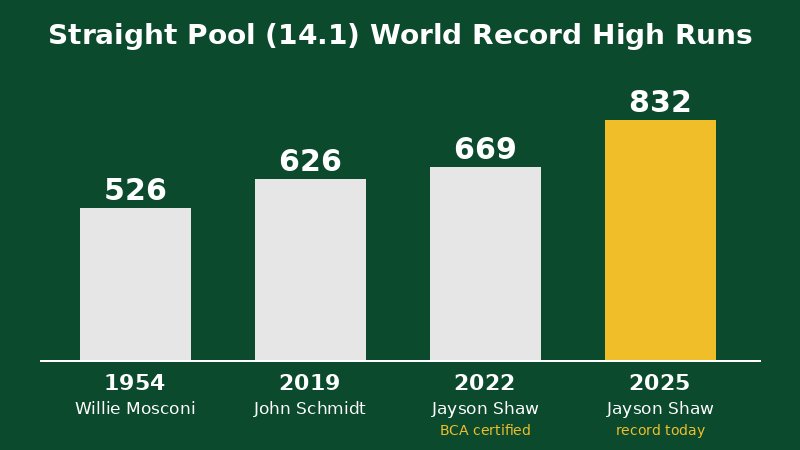
Bar chart of straight pool 14.1 world record high runs: Mosconi 526 in 1954, Schmidt 626 in 2019, Shaw 669 in 2022 and Shaw 832 in 2025

Straight Pool Record History: From 526 to 832

Quick answer: The straight pool high run record went from 526 (Willie Mosconi, 1954) to 626 (John Schmidt, 2019) to 669 (Jayson Shaw, 2022) to 832 (Jayson Shaw, 2025). 832 is the record today.

Bar chart of straight pool 14.1 world record high runs: Mosconi 526 in 1954, Schmidt 626 in 2019, Shaw 669 in 2022 and Shaw 832 in 2025
The straight pool record went from 526 to 626 to 669 to 832. Jayson Shaw holds it now with 832 balls. Graphic: Ted Mauro

Watch the video

Watch the straight pool record video on YouTube

What You Will Learn

  • Each record run, in order
  • Where each one happened
  • Which run was changed after review
  • What may come next

1954: Mosconi, 526

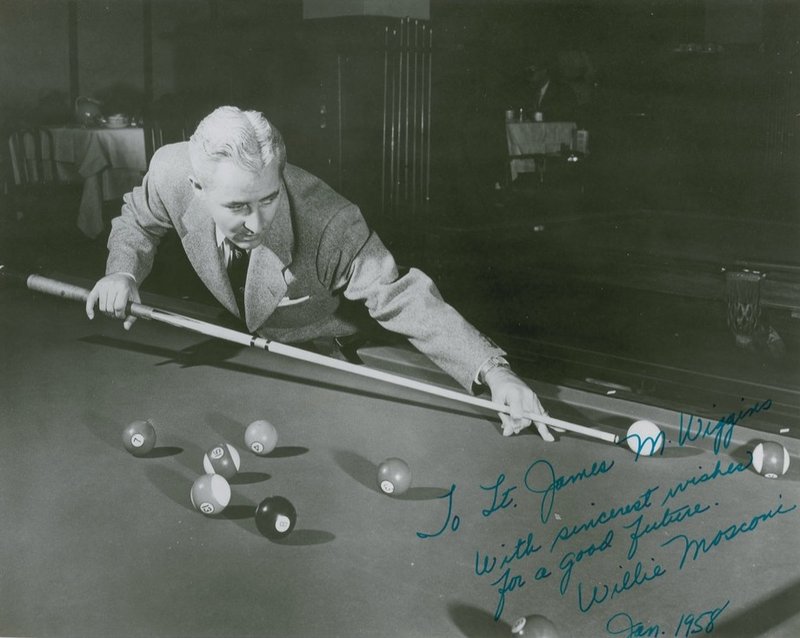
Willie Mosconi ran 526 on March 19, 1954, at the East High Billiard Club in Springfield, Ohio. It was during an exhibition match. That record held for 65 years.

Willie Mosconi, holder of the 526 ball straight pool high run, shooting at the pool table in about 1958
Willie Mosconi at the table in about 1958. He ran 526 balls in 1954, and that record lasted 65 years. Photographer unknown. Public domain, via Wikimedia Commons

2019: Schmidt, 626

John Schmidt ran 626 on May 27, 2019, at Easy Street Billiards in Monterey, California. The BCA certified it on August 15, 2019.

John Schmidt, the pool player who broke the Mosconi record with a 626 ball straight pool high run in 2019
John Schmidt in 2004. In 2019 he ran 626 balls and broke the Mosconi record. Photo: RailbirdJAM, CC BY-SA 4.0, via Wikimedia Commons

2022: Shaw, 669

Jayson Shaw ran 714 on January 18, 2022. A BCA review found a foul on ball 45, so the run was certified as 669.

2025: Shaw, 832

Shaw ran 832 on January 6, 2025, at BAK Room Billiards Studio in Lorton, Virginia. The BCA confirmed it as the new record.

2026: Schmidt, 820 (Unofficial)

On March 10, 2026, Schmidt ran 820 in a private session in Rock Springs, Wyoming. Billiards Digest says he fouled earlier in that run, so it does not count as a record.

Shaw has said, “My goal is 1000.” No one has done it as of October 2026. For quotes, videos, and more detail, see this longer look at the 14.1 high run record. To learn the game yourself, try these billiards lessons videos.

The Bottom Line

The record took 65 years to fall the first time. Then it fell three times in about six years. Schmidt is still close behind, and Shaw wants 1,000. The next big number could come any day. If you love the history of this game, this is a great time to watch.

FAQ

How many times has the record been broken since 1954?
Three times: 626, 669, and 832.

Is Schmidt’s 820 the record?
No. It is unofficial because of an earlier foul.

Who keeps the record?
The BCA certifies it.

Why did Mosconi’s record last so long?
No one beat 526 until Schmidt ran 626 on May 27, 2019, 65 years later.

Get My Free 7 Part Fundamental Billiards Course

Sources

About the Author

I am Ted Mauro. I have played pool for over 50 years and played organized league and tournament pool for over 38 years.

Billiard Terms and Definitions: 25 Words Every Player Should Know

TLDR: Pool has its own words. Knowing them helps you follow lessons, talk with other players, and understand the rules. Here are 25 common billiard terms and definitions, in plain English.

Striped object ball on green cloth, one of the billiard terms and definitions
“DSCF0418 A close-up of a striped billiard ball resting on the green felt of a pool table with blurred bar lights and cues in the background.jpg” by PattayaPatrol, CC BY-SA 4.0, via Wikimedia Commons

What you will learn:

  • 25 common pool words
  • What each one means
  • How they are used at the table

I have played pool for more than 50 years and in leagues and tournaments for more than 38 years. When I was new, people used words I did not know. I nodded and pretended. You do not have to. Here is a simple list.

Table Words

  1. Rail. The cushioned edge around the table.
  2. Diamonds. The small marks on the rails. They help with aiming and banks.
  3. Head string. An imaginary line near the head end. You break from behind it.
  4. Foot spot. The spot near the foot end where the front ball of the rack sits.
  5. Pocket. One of the six holes. Four corners and two sides.

Ball Words

  1. Cue ball. The white ball. You hit it with the cue.
  2. Object ball. Any ball you try to make.
  3. Solids and stripes. In 8 ball, balls 1 to 7 are solids and 9 to 15 are stripes.
  4. Rack. The triangle (or diamond) that holds the balls. Also the set of balls once racked.

Shot Words

  1. Break. The first shot of a game that spreads the balls.
  2. Bank shot. The object ball hits a rail before it goes in.
  3. Kick shot. The cue ball hits a rail before it hits the object ball.
  4. Combination (combo). The cue ball hits one ball into another, which goes in.
  5. Carom. A ball glances off another ball.
  6. Cut shot. A shot where you hit the object ball at an angle.
  7. Safety. A defensive shot. You try to leave your opponent with no good shot.

Cue Ball Control Words

  1. Follow. Hitting above center. The cue ball rolls forward after contact.
  2. Draw. Hitting below center. The cue ball comes back toward you.
  3. Stop shot. The cue ball stops where it hits the object ball.
  4. English. Side spin, from hitting the cue ball left or right of center.
  5. Position. Where the cue ball ends up for your next shot.

Rule Words

  1. Scratch. The cue ball goes in a pocket. It is a foul.
  2. Foul. Breaking a rule. Your turn ends, and there is a penalty.
  3. Ball in hand. After a foul, the other player can place the cue ball where they want.
  4. Run out. Making all the balls you need in one turn to win.

How to Learn These Words

Do not try to learn them all at once. Pick five. Use them when you play. When you watch a lesson, listen for them. Soon they will feel natural.

A Few Fun Slang Words

Players also use slang. “Sandbagger” is someone who plays worse on purpose to look weak. “Hanger” is a ball sitting right at the edge of a pocket. You will hear these at any pool hall.

Learn More

My Pool School uses these words in its lessons. My YouTube channel shows many of these shots.

FAQ

What is the difference between a bank and a kick?
In a bank, the object ball hits the rail. In a kick, the cue ball hits the rail first.

What does “english” mean in pool?
It means side spin on the cue ball.

What is a scratch?
When the cue ball goes in a pocket. It is a foul.

What is a safety?
A defensive shot meant to leave your opponent a hard shot.

Summary

These billiard terms and definitions will help you follow lessons and talk pool with anyone. Start with a few, use them at the table, and add more over time.

About the Author

I am Ted Mauro. I have played pool for more than 50 years and in leagues and tournaments for more than 38 years.